
Review: A Splintering by Dur e Aziz Amna
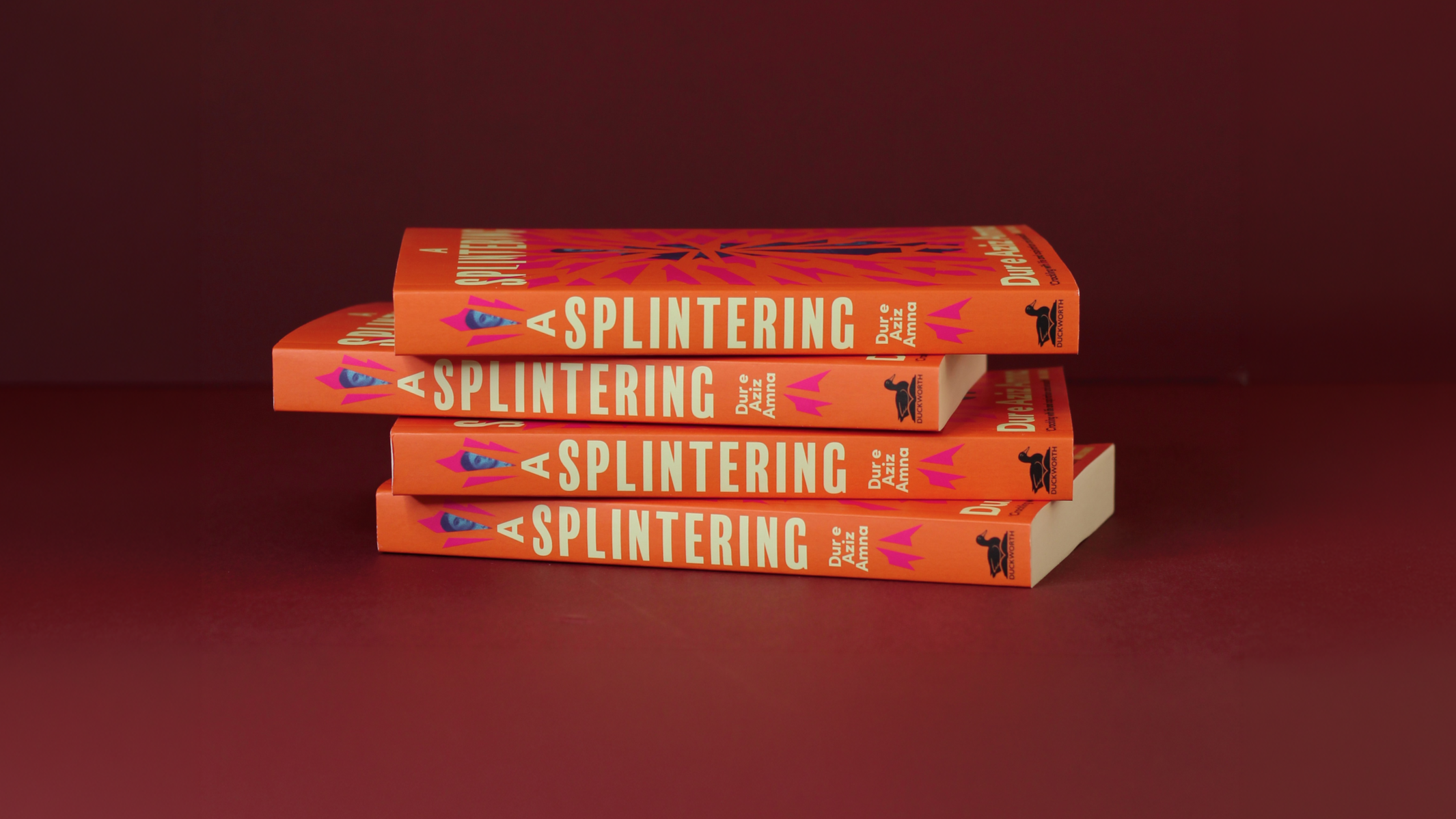
Shortlisted for the 2026 Nota Bene Prize, A Splintering is a masterful evocation of a woman desperate to escape the class she came from, steeped in the turbulence and division of modern Pakistan. An unforgettable story of motherhood, obsession and ambition.
In a village in rural Pakistan, Tara is waiting and watching. The smell of dung and dust hangs over her world. She is desperate to leave the petty life of the village and escape the iron grip of her violent, unpredictable brother. Marrying a middle-class accountant allows her to escape to the capital, but she soon finds that life as a respectable housewife is not sufficient either. She wants what the rich mothers at her children’s school have. She wants what their husbands have. But can she truly shake her past? And what of the menacing spectre of her brother, a reminder of the threads that tie her to the life she left behind?
Set against a hypnotic, oppressive backdrop of political violence and natural disaster, A Splintering traces the class struggle of a woman stuck between province and metropolis, between motherhood and ambition. Disquieting and utterly gripping, it is an extraordinary achievement by Dur e Aziz Amna, an exploration of a complex and unforgettable character who will risk everything to carve out a life of her own.
REVIEWED BY JENN
A Splintering is a beautiful and impactful read that features a compelling and unique character in Tara. The novel follows her coming-of-age journey from rural Pakistan to urban city life, as she attempts to escape the limitations of the world she was born into. Tara may not always be likeable given the choices she makes, but it is difficult not to root for her and admire her tenacity and ambition as she grapples with class divides, prejudice, and the cultural challenges of being a woman with a controlling and violent brother.
The setting is immersive, offering stark contrasts between rural and urban life, and highlighting how the city presents new opportunities for Tara beyond the more restrictive expectations of her upbringing. The lengths she goes to in order to change her circumstances are striking, adding to the novel’s sense of intensity and unpredictability.
It is a gripping, page-turning read, full of momentum and charged with energy. While firmly a work of literary fiction, it is also grounded in key moments of Pakistan’s sociopolitical history, which anchor the narrative and act as a catalyst for Tara’s own transformation.
The ending is shocking, yet feels true to the direction of the story, prompting reflection on Tara as a character and the person she becomes.
There are many thought-provoking strands running through this novel, making it a strong choice for book clubs and discussion. It is a striking and memorable read that feels deserving of wider attention.