
Review: The Original by Nell Stevens
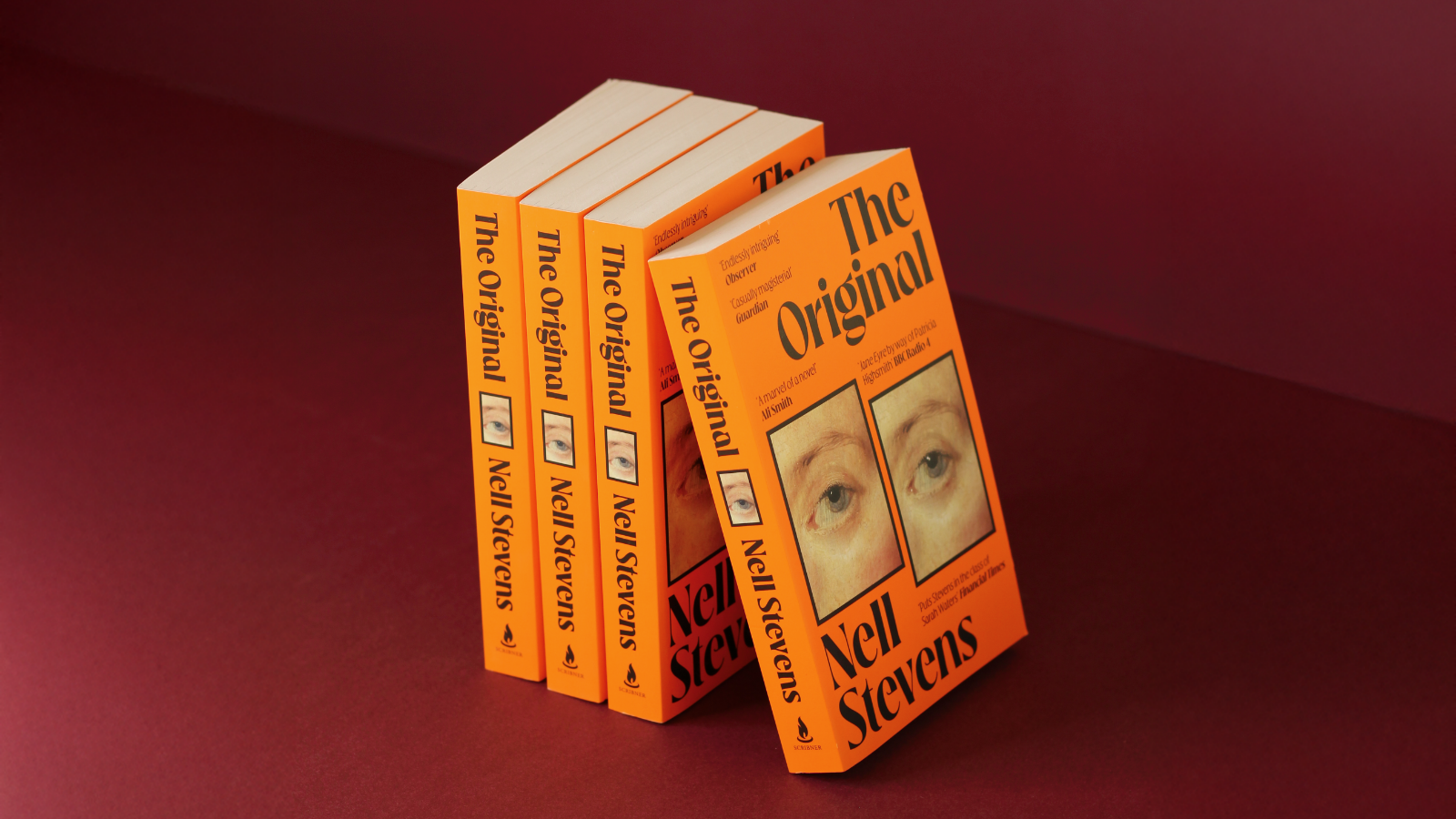
Shortlisted for the 2026 Nota Bene Prize, The Original explores issues of art and authenticity with fierce intelligence and page-turning style, following an unusually perceptive child swept up in an intriguing case of disputed identity.
Oxfordshire, 1899. Grace Inderwick grows up on the peripheries of a once-great household, an unwanted guest in her uncle’s home. She has unusual skills and unusual predilections: for painting, though faces elude her; for lurking in the shadows; for other girls.
Then a letter arrives, postmarked Saint Helena. After years missing at sea, Grace’s cousin Charles is ready to come home. When Charles returns, unrecognisable and uncanny, a rift emerges between those who claim he is an imposter and Grace’s aunt, who insists he is her son. And Grace, whose intimate knowledge of forgeries is her own closely-guarded secret, must decide who and what to believe in, and what kind of life she wants to live.
REVIEWED BY SOL NOYA CARRENO
Narrated in the unforgettable voice of Grace Inderwick, orphaned and taken in by her uncle and his family, The Original weaves a rich tapestry of deception, secrecy, and art. In the shadows of the Inderwicks’ gloomy Oxfordshire estate, Grace has discovered a talent for copying in-demand paintings: a tenuous path to independence and financial security, should she not receive an inheritance. As the 19th century draws to a close, her cousin Charles, presumed lost at sea, makes a sudden reappearance to claim the estate and the family’s dwindling fortune. Grace, despite being afflicted with prosopagnosia (face blindness), nevertheless endeavours to discover if Charles really is her cousin returned or merely a cunning facsimile.
One of the novel’s many strengths is Stevens’ treatment of deception and façades, which gives the story both nuance and consistent propulsion. There is, of course, the question of whether Charles is who he claims to be, and what that means for the inheritance. But Grace, too, is living a double life of sorts: both cousins are forced to keep their queer identities secret from a society where the threat of being exposed implies not simply ostracisation but a one-way ticket to a madhouse or a prison. A lesser novel could stay within the bounds of this question and be compelling, but Stevens takes it a step further, continuously provoking the reader to ponder — does it matter if the face you show the world is your real one, and if so, when, and why? What is the true value of authenticity, in every sense of the word? Like all the best literature, The Original prompts far more questions than it answers.
Stevens’ writing is stellar throughout the novel: the tableaux of Victorian England, Italy, and Chile all unfold before the reader’s eyes and as her characters move through these settings, they reveal layer after surprising layer. The many paintings that frame the plot, too, are visualised for the reader down to the individual brushstrokes, a granularity that nevertheless feels like it stems from Grace’s own deeply observant nature. Indeed, one of the joys of being told this story from Grace’s perspective is her sharp eye for every sensory detail she sees and experiences (faces excluded). These particulars are delightfully conveyed to the reader not only in Grace’s recounting of the main events of the plot but in her diaristic aphorisms that slip in between. Her tangents on art, copies, and sanity all feel like they have firmly earned their place in the narrative: no easy feat, but Stevens proves herself more than up to the task.
It’s clear that a lot of research, time, and love went into writing this astonishingly vivid story. After finishing The Original, I can firmly say that if there’s a world where I’m not excited for new writing from Nell Stevens, I can’t conceive of it.